This is my first time talking about 20 Time on this blog, so let me explain what it is. The idea behind this is that employees or students or anyone, can take around 20% of time out of their normal working hours to instead work on something else, something special and interesting to them, a passion project. In Google, these so-called passion projects led to ingenious inventions such as Gmail, Google Shopping Express, and many other world changing inventions.
For my 20 Time project, I investigated a phenomenon that affects many teens schoolwide, and probably worldwide. I did experiments about procrastination. I chose this as my research interest because procrastination is also something that affects me, and is often times my biggest adversity. In doing research on how to combat procrastination, I was actually able to help myself battle it.
You can get to my 20-Time blog right here: http://jeffrey20time.blogspot.com/
What I planned to do was to test various procrastination-combatting tips/methods and test it on some of my peers and myself. I thought that in this relatively large amount of time, I would be able to get a control experiment finished as well as perhaps 20 or so methods. That was rather optimistic of me.
I didn't realize that for each individual method, large amounts of testing was required to ensure accuracy of results. After I realized that just testing 1 or 2 methods took almost a month to complete, I readjusted my goals and thought that testing 5-10 tips in total was an achievable but also quite challenging goal. I finished testing 7, which I am pretty happy with. Another roadblock that came my way was that when I would tell my peers what methods to try out while doing homework, sometimes they would forget to use them or do something completely different! So I fixed this by creating a Facebook group chat (teenagers always are on Facebook these days) and I communicated with them through this helpful medium.
I made a data spreadsheet documenting the different times of finishing homework for me and my peers and you can help yourself in your procrastination by looking at some of these tips. The link is right here
One thing I learned from this project is that although people share many similarities in working habits, they are way more differences. Some of the methods I tested, I expected everybody to improve their working efficiency, but instead, some still were slower. Also, for the methods that I thought were probably not going to make a huge difference or be a burden on doing homework, they actually were able to drive some of my peers to finishing their homework hours earlier!
I also picked up some soft/process skills. Cutting up the workload and time management were quite important for me. Sometimes, I would fall behind schedule due to limited time at school or other groups pestering me to help them, but I would always go home afterwards and find time to catch up and get ahead.
If I could change this project in any way, I would definitely make it larger scale. The only people I was able to document in my studies were just me and 4 of my peers that took part in the experiment. Perhaps next time, I could do polls and surveys on the SHS Facebook group and allow for a broader scope of views on procrastination.
I learned something about myself along the way. I tend to work much better under deadlines. Towards the beginning of the project, I was lagging pretty behind in terms of goals, but as deadlines approached, I was much more insistent on my peers to finish their tasks and would almost work on 20 Time at home on a daily basis. It turns out, this worked well, as I finished about a day early compared to most of the other students in the class.
I'm not sure how I could continue this project in any way, but one thing is for sure. I will apply what I learned from this lab as much as I can in my life. This way, I'll be much more effective at finishing schoolwork and be able to put in more time to other things that I enjoy doing, going beyond just school, and sports. In my opinion, being effective at getting work done not only enhances your work ethic, but allows for a more enjoyable life.
Monday, May 22, 2017

Wednesday, May 10, 2017
Unit 9 Reflection
The title of this unit was: What on Earth Evolved? As you can probably tell from the title of this unit, we learned about the different groups of organisms that evolved on Earth and the order in which they evolved. So starting off, the most primitive life on Earth began with unicellular prokaryotes like bacteria and archaea. Some may argue that viruses are living, but they don't have many of the characteristics of life.
Then, there evolved the domain Eukarya, when prokaryotes began living inside each other as symbiotic organelles. In the domain Eukarya, there were four kingdoms, namely: Protista, Animalia, Fungi, and Plantae. In the kingdom Animalia, we humans belong to the phylum Chordata, class Mammalia, order Primates, and so on. We are considered one of the most recently evolved organisms. A good way to see how new traits evolved and created new groups is a phylogenetic tree. Below I have attached an image of one regarding all the organisms within phylum Chordata.

One of the major projects in this unit was the What on Earth Evolved? presentations. My presentation went quite well, and I attribute my success to the fact that I practiced a lot in front of the mirror, my parents, my brother, even my dog! I got feedback from the mirror by making sure my posture was good, and that I didn't sway. My parents gave me helpful feedback by suggesting certain topics I should include in the presentation to make it more engaging and interesting. This made my presentation not only get a good grade, but I was able to enjoy the process of presenting something that was quality. In the future, I will always make sure to overprepare for such presentation, as the payoff is always worth it.
The link to the actual slideshow can be found right here. The topic of my presentation was the Human Immunodeficiency Virus (HIV)
Although the Geologic Timeline assignment was a Unit 8 assignment, we only completed it during the beginnning of this unit, so I would like to attach the link to my reflection right here. If you really think about it, the Geologic Timeline actually ties in quite a bit with taxonomy, because it shows us the huge amount of time that Earth was inhabited by only unicellular organisms, and how long it took to evolve complex organisms, and that we humans only occupy a tiny sliver of time compared to life on Earth.
This unit has definitely helped me grow as a person. Being put in front of a classroom of 30 students and presenting really pushed my out of my comfort zone. I feel a lot more comfortable now speaking in front of large audiences. However, one thing I still struggled with this unit was trying to pay better attention to other people's presentations. I need to improve my active listening so I can learn more.
Here is a photo of a chart I made for the taxa observation of organism to help me better understand common characterstics.

Then, there evolved the domain Eukarya, when prokaryotes began living inside each other as symbiotic organelles. In the domain Eukarya, there were four kingdoms, namely: Protista, Animalia, Fungi, and Plantae. In the kingdom Animalia, we humans belong to the phylum Chordata, class Mammalia, order Primates, and so on. We are considered one of the most recently evolved organisms. A good way to see how new traits evolved and created new groups is a phylogenetic tree. Below I have attached an image of one regarding all the organisms within phylum Chordata.
One of the major projects in this unit was the What on Earth Evolved? presentations. My presentation went quite well, and I attribute my success to the fact that I practiced a lot in front of the mirror, my parents, my brother, even my dog! I got feedback from the mirror by making sure my posture was good, and that I didn't sway. My parents gave me helpful feedback by suggesting certain topics I should include in the presentation to make it more engaging and interesting. This made my presentation not only get a good grade, but I was able to enjoy the process of presenting something that was quality. In the future, I will always make sure to overprepare for such presentation, as the payoff is always worth it.
The link to the actual slideshow can be found right here. The topic of my presentation was the Human Immunodeficiency Virus (HIV)
Although the Geologic Timeline assignment was a Unit 8 assignment, we only completed it during the beginnning of this unit, so I would like to attach the link to my reflection right here. If you really think about it, the Geologic Timeline actually ties in quite a bit with taxonomy, because it shows us the huge amount of time that Earth was inhabited by only unicellular organisms, and how long it took to evolve complex organisms, and that we humans only occupy a tiny sliver of time compared to life on Earth.
This unit has definitely helped me grow as a person. Being put in front of a classroom of 30 students and presenting really pushed my out of my comfort zone. I feel a lot more comfortable now speaking in front of large audiences. However, one thing I still struggled with this unit was trying to pay better attention to other people's presentations. I need to improve my active listening so I can learn more.
Here is a photo of a chart I made for the taxa observation of organism to help me better understand common characterstics.
Thursday, April 20, 2017
Geologic Timeline Individual Reflection
3 of the major events of Earth's history include the Cambrian Explosion, the Permian Extinction, and the Cretaceous extinction. The Cambrian Explosion was highly significant and is often referred to as the most significant evolutionary event on Earth due to the rapid appearance of many animals with mineralized, fossilized remains. The evolution of skeletal structures that leave behind fossils is essential to the study of fossils. The Permian Extinction is highly significant because it was the largest extinction event in all of Earth's history, with 96% of all marine species becoming extinct. The Cretaceous extinction is also very significant because without the extinction of the dinosaurs, mammals would have never radiated and humans would have never came to be.
Earth's history relative to human history is much more grand than I had first expected. On the timeline extending from one end of the classroom to the other, our little sliver of time is absolutely negligible.
However, despite this short period of time that humans have been on this planet, they have had massive effects. Ice caps are melting, many places are flooding, nature all around us is being destroyed and used instead for industry. At this rate, I feel that the human population will not be able to sustain itself for much longer until we choke ourselves to death.
One question I wonder about is why it took so long for humans to evolve, to come to be. So much of Earth's history involved only single-celled organisms, which seems a bit counterintuitive as multicellular organisms seem more likely to dominate.
Below I have attached a couple photos of the timeline:


Earth's history relative to human history is much more grand than I had first expected. On the timeline extending from one end of the classroom to the other, our little sliver of time is absolutely negligible.
However, despite this short period of time that humans have been on this planet, they have had massive effects. Ice caps are melting, many places are flooding, nature all around us is being destroyed and used instead for industry. At this rate, I feel that the human population will not be able to sustain itself for much longer until we choke ourselves to death.
One question I wonder about is why it took so long for humans to evolve, to come to be. So much of Earth's history involved only single-celled organisms, which seems a bit counterintuitive as multicellular organisms seem more likely to dominate.
Below I have attached a couple photos of the timeline:
Monday, April 10, 2017
Unit 8 Reflection
I always like to start off with the title of the unit. This unit was called Constant Change. This makes a lot of sense because evolution is all about how populations are always changing.
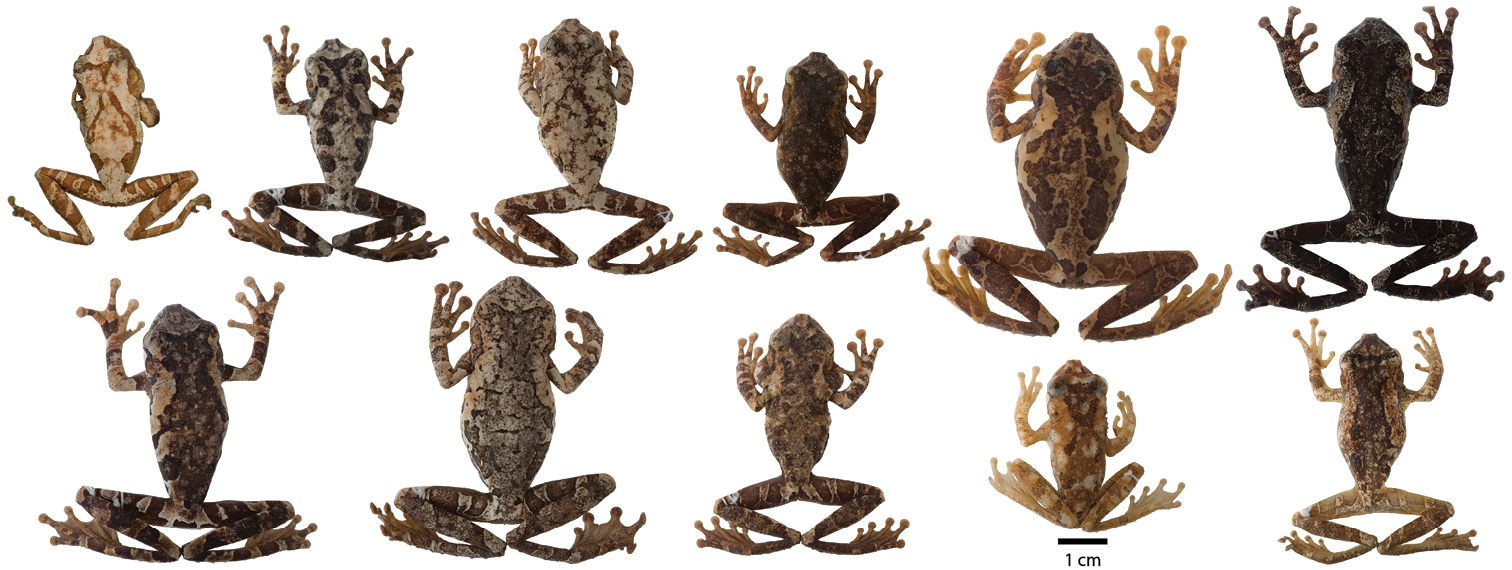


But how exactly does evolution work? There are many mechanics involved in evolution, but one of the main causes is natural selection. In order for natural selection to occur within a population, there must first be variation. Variation is created through mutations and sexual reproduction. Natural selection favors individuals with traits that help them survive better, causing them to better produce more offspring, so that over time, the population begins to look more like these individuals. An interesting lab we did to demonstrate this concept was the hunger games lab. Other factors that can cause evolution include gene flow, genetic drift, sexual selection, and mutations.
Speciation is one of the causes of evolution. As two populations of the same species have reproductive isolation, they begin to evolve differently based on their different ecological niches. Soon, they become so different that they can no longer reproduce with each other anymore. This is when one species becomes two.
There is a lot of evidence to back these ideas up. First and most obvious is fossils. Fossils found in the earth can tell scientists a lot about when and what individuals looked like. By carefully studying the differences from fossil to fossil, it is pretty clear how and when a population evolved. Also good evidence is the fact that many organisms that are very different (i.e. birds and flies) can evolve analogous and homologous structures.
One thing that I wonder a lot about is that although it appears that many populations of organisms like animals and plants are evolving, I feel that the human population appears to be still quite the same as before. Why is that? Hmmm.
Below, I have attached some images that I feel highlight some of the key ideas of this unit:
Thursday, March 30, 2017
Hunger Games Final Analysis
1. In this lab, each person had to grab as much food as they could based on their phenotype and try to reproduce by the end of the round. This lab simulated the workings of evolution on a population.
2. The phenotype which was best at capturing food was the pinchers, because of the fact that they could grab lots of food quickly with their opposable thumbs and index fingers.
3. The population did evolve because the allele frequency changed. At the beginning, the frequency of the "a" allele was only 48%, but by the end, it had already reached 78%. See the graph below for intermediate changes and you will be able to see the rate of change better.
4. Some events in this lab that were random were the placement of the food, the amount needed to survive, the coin-flipping that would determine the offspring. Some things that were not random were the possibilities of the offspring and the methods that we used to pick up food. This affected the evolution because some rounds had way more deaths than others because of these arbitrary conditions.
5. The results would definitely have been more different if the food was larger. The knucklers definitely and the pinchers perhaps would have a more difficult time picking up the food in between their little fingers. This can also happen in nature where changes in external conditions can be advantageous for some and disadvantageous for others.
6. Yes, the results would definitely have been more different. Without incomplete dominance, there would be no knucklers, only pinchers and stumpys. This probably would have resulted in more stumpys initially as the homozygous genotype would still create a stumpy.
7. The relationship between natural selection and evolution is that natural selection acts on the favorable phenotype, allowing it to survive and reproduce better, and as natural selection occurs over longer periods of time, the population will gradually change to look more like these organisms with the favorable trait. This gradual change in a population over time is evolution.
8. The stumpys, although not necessarily best suited for survival, were very good at strategizing and teaming up. In my opinion, it looked like they only mated with each other to produce "the superior stumpy race." This seemed to cause a bounce-back in the population of the stumpy, and I congratulate them for not dying out.
9. In evolution, it is the population that evolves. Natural selection acts on the phenotype, as that is what directly affects the organism's ability to survive. To further elaborate, in the case of complete dominance, a homozygous dominant and a heterozygous will have the exact same phenotype, so their ability to survive will be pretty much equal. As you can see, the genotype is not the whole story in this case.
10. I still have one burning question though: If evolution is by definition a change in allele frequency, then isn't evolution occurring every second (each time an organism dies, the allele frequency changes a bit) and not really a "gradual change over time?"

Wednesday, March 8, 2017
Unit 7 Reflection
Unit 7 was titled "The Study of House." What this is referring to is ecology. This name actually makes quite a lot of sense because in studying ecology, we study the mechanics that take place within the biosphere, which is the "house" in which we live. Some topics we covered in this unit include food chains, food webs, ecosystem energy, populations, ecosystem conservation, and much more.
At first, these topics may seem to be very different, but looking at the larger scope of things, these topics are actually quite interrelated. For example, within the food web, energy is transferred from lower trophic levels to the higher, and this energy is actually what is needed to maintain an ecosystem's health and to keep its populations balanced. Personally, my favorite part of this unit was population dynamics, as the behavior of populations as they reach the carrying capacity K and the oscillations about K seemed very intuitive and mathematical, and math is sort of my thing. In this unit, we also watched The Story of Stuff, which I took some pretty decent notes on. You can access my notes here.
So I'm pretty familiar at this point with ecology concerning organisms, populations, communities, and ecosystems, but I've also heard of another type of ecology called landscape ecology and am pretty curious to maybe find out about what that is in the future.
One big project that we did during this unit was the Conservation Biologist Project (link to the video). This project really opened my eyes and really put things into perspective, the fact that ecosystems are something undeniably real and close to us. It is our duty to protect and conserve these ecosystems as as of right now, Earth is our only home (house). Some things I felt that our group did really well was the fact that we had really good communication and everybody did what they pledged to do. However, I feel that with a little more time, maybe we could have touched up the slides, recorded perhaps a bit more attempts, and also modify the content a bit more.
Overall, this unit was one of my favorite units, and I really learned quite a bit about our house, Earth.
Below I have attached a picture of logistic growth:
So I'm pretty familiar at this point with ecology concerning organisms, populations, communities, and ecosystems, but I've also heard of another type of ecology called landscape ecology and am pretty curious to maybe find out about what that is in the future.
One big project that we did during this unit was the Conservation Biologist Project (link to the video). This project really opened my eyes and really put things into perspective, the fact that ecosystems are something undeniably real and close to us. It is our duty to protect and conserve these ecosystems as as of right now, Earth is our only home (house). Some things I felt that our group did really well was the fact that we had really good communication and everybody did what they pledged to do. However, I feel that with a little more time, maybe we could have touched up the slides, recorded perhaps a bit more attempts, and also modify the content a bit more.
Overall, this unit was one of my favorite units, and I really learned quite a bit about our house, Earth.
Below I have attached a picture of logistic growth:
Monday, March 6, 2017
Story of Stuff
- Using up resources occurs in a linear fashion, however, this linear fashion cannot continue indefinitely because of the fact that we only have a limited amount of resources on this planet
- Stuff moves through a system that starts with extraction, then production, distribution, consumption, and finally, disposal
- However, this doesn't tell the complete story as many different phenomena happen along the way
- Many people live under crazily bad conditions, like for example, when their own environments can no longer sustain them, they take jobs even for crazy low pay and harmful working conditions such as toxins in the air, etc
- The government is almost as if it's under the big corporations
- The system is set up in a way that encourages people subliminally that consuming is the most important thing that somebody can do.
- However, truth to be told, many of our natural resources are running out because of the reckless rate at which we are consuming.
- The U.S., which only accounts for about 5% of the world's population, actually consumes 30% of the resources. If everybody consumed as we did, we would need an additional 5 Earths.
- Many of the chemicals used in production haven't been tested
- 99% of consumed goods are thrown into the trash and disposed of within six months of use
- Many people are influenced to keep on buying new things because items are designed to lose effectiveness in a short period of time, or people are pressured by those around them to shop for things to "stay in trend"
- Interestingly enough, the national happiness factor is still not quite as high as the 1950s because this constant cycle of shopping, feeling depressed, working etc. leaves barely any time for people to spend time on things that actually matter, such as friends, family etc.
- Incinerating trash creates really bad toxins
- Although recycling helps, it is for sure not enough to get to the core of the problem
- However, since this heavily flawed system was created by people, it means that it is definitely possible to stop it, since we are people as well. If we can come up with a large-scale solution, this problem (at least in my opinion) can definitely be solved, we just need to raise awareness and educate the others out there
Subscribe to:
Posts (Atom)